R o b e r t D r u c k e r A r t
The Divinity of Wild Grasses, 2005
Grasses, sedges, rushes and reeds—these are the divine of the earth. They hold the soil to the earth, and unite the sea and the land.
In late antique Europe, artists began painting religious scenes on hinged wood panels that closed like a book—the “diptych”—as portable altarpieces. By the middle ages, many of these were made to open onto a third, central panel, with additional internal paintings on the inside wings— the triptych. The outer panels were often cosmological, painted in grey or muted tones, and opened onto more colorful and elaborate religious scenes. Some altarpieces had even more panels—the famed Ghent Altarpiece, completed by the Van Eyck brothers in 1432, has a total of 12 panels, some painted on front and back.
By recalling these early religious forms, my intention is to impart a sense of divinity to the work- in a sense, to sanctify it.
See also Breath of the Sea, 2006-7.
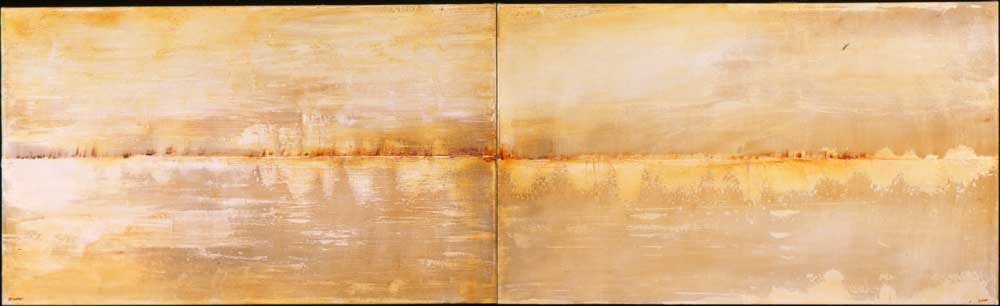
The Divinity of Wild Grasses I, 2005
acrylic and sumi ink on canvas
30 × 96 in
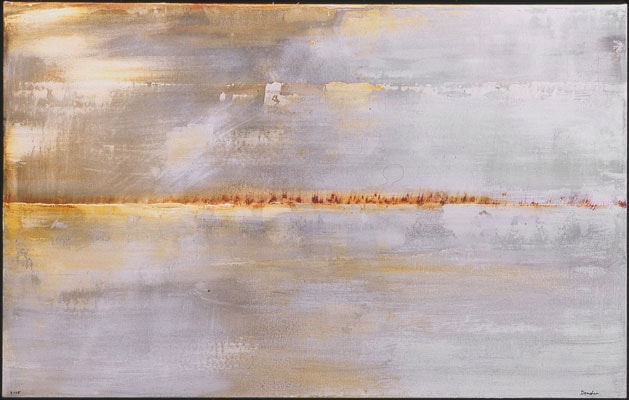
The Divinity of Wild Grasses II, 2005
acrylic and sumi ink on canvas
30 × 48 in
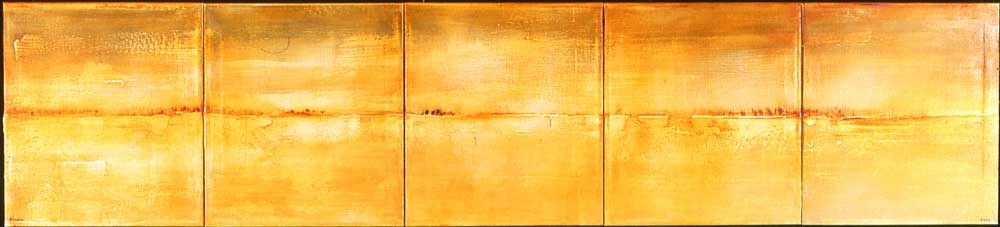
The Divinity of Wild Grasses III, 2005
acrylic and sumi ink on canvas
20 × 91 in
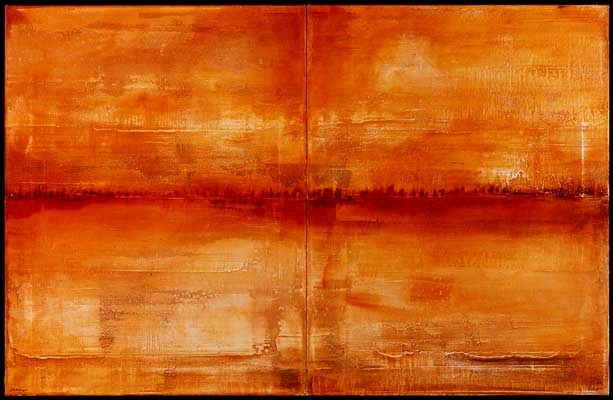
The Salted Earth I, 2005
acrylic and sumi ink on canvas
36 × 56 1/2 in
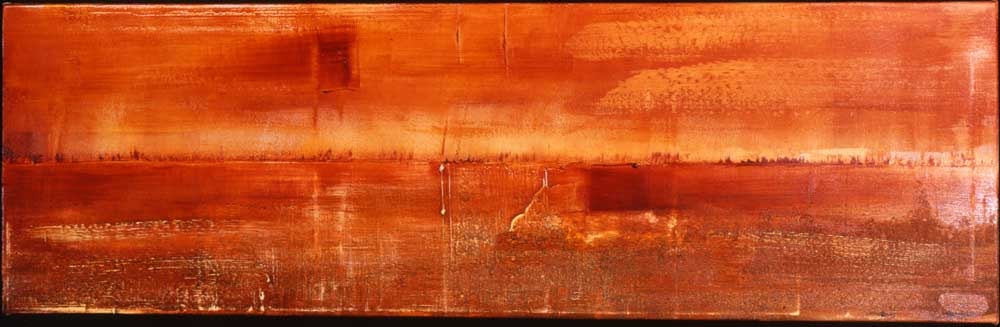
The Salted Earth II, 2005
acrylic and sumi ink on canvas
17 3/4 × 54 in
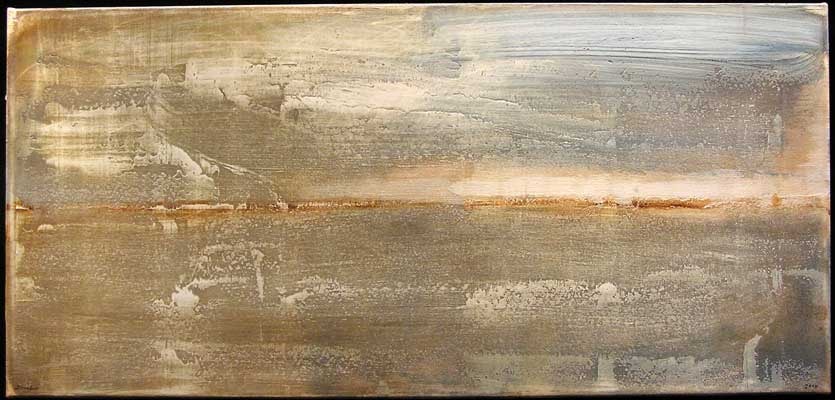
The Earth Will Carry You, 2005
acrylic and ink on canvas
20 1/4 × 43 in
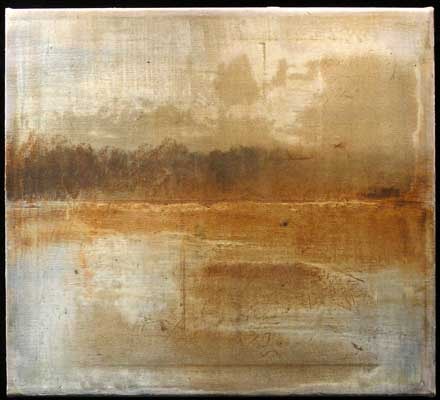
Somewhere, 2005
acrylic and ink on canvas
18 × 20 in
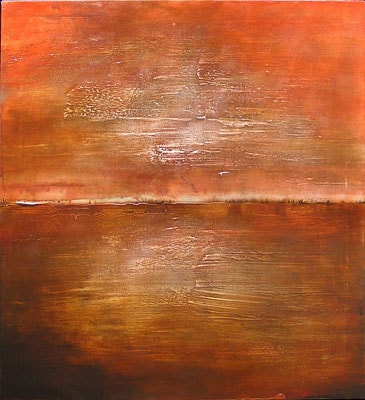
Between Heaven and Earth, 2005
acrylic and ink on canvas